 تويت
 Service Dates, Licences and Renewals
Small businesses lose vehicles to missed paperwork as often as to breakdowns. A good platform stores vehicle registration expiry, insurance renewal, periodic inspection and driver licence dates, and sends reminders weeks ahead. Service reminders by kilometres or engine hours keep oil changes on time, which prevents the expensive failures that arrive when a service slips by three thousand kilometres.
A documented history lifts resale value. A buyer shown twelve months of verified service entries and mileage records pays with more confidence than one handed a fuel receipt and a promise.
Winning Larger Clients With Evidence
Procurement teams at large companies in oil, construction, retail and government ask subcontractors how they supervise vehicles and equipment. A SME that can attach a monthly report with trip logs, speed compliance and maintenance records answers that question in a single page and starts the comparison from a stronger position.
Safety audits follow the same pattern. A fleet with recorded speeding events and documented coaching meets the auditor with evidence, while a fleet with none relies on a verbal assurance.
Affordable Systems That Keep Professional Features
Modern tracking is sold as a monthly subscription per vehicle, which removes the large upfront expense that once kept small firms away. An anti-theft GPS tracker for fleet in Kuwait and across the GCC ,A plan in the range of KWD 3 to 6 per vehicle per month is common in the region, with hardware either bundled or priced separately. (Illustrative range, not documented data; request current quotations.)
Start with the vehicles that cost you the most, perhaps three, and add others as results come in. A good provider lets you add units without changing platform or contract, offers a mobile app so you can check the fleet from a diwaniya or a customer’s office, and supports Arabic and English screens. Look for monthly billing without long lock-in terms.
From Eight Units to Eighty Across the Gulf
Growth tests a system. A tracking platform that handles eight vehicles should handle eighty without a rebuild: sub-accounts for branches, user roles for supervisors, reports per team and consolidated billing. A firm that opens a branch in Dammam or Dubai adds vehicles to the same account and keeps one view of the group.
Multi-network SIMs carry the units across borders, and local installers in each country keep service close. Ask a provider for a reference from a customer who started small and grew.
The Payback in Plain Arithmetic
Take the eight-vehicle company again. Tracker subscriptions at KWD 4 per vehicle come to KWD 384 a year, and hardware at KWD 30 per unit adds KWD 240 once. Fuel savings of 128 litres a month, a few fewer missed renewals and one avoided repair a year easily exceed that spend. (Illustrative arithmetic, not documented data.)
Ask a provider for a live demonstration using three of your own vehicles. Within a week the fleet appears on your phone, reports begin to build, and you decide with real figures whether the other five units follow.
Month One on the New System
In the first week you will find the vehicle that idles longest and the driver who stops most often. By week three the fuel report will match the receipts, or it will not, and either result teaches you something about your fleet. At the end of the month, sit with your accountant, compare the new numbers with last month’s bills, and decide which vehicles join the system next.
One Excavator, One Crane, Hourly Rates
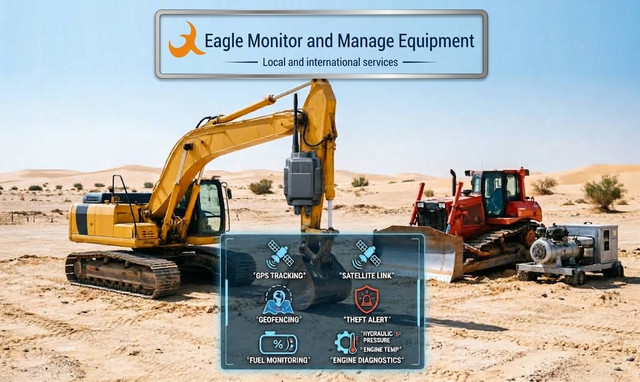
Many Kuwaiti SMEs earn their income from a single heavy machine rented by the hour or the day. Disputes arise over billed hours versus actual hours, and over idle time when the engine runs but the bucket does not move. Telematics settles it by separating engine-on hours from working hours, using a hydraulic pressure signal or a power take-off input to detect real work.
Operators gain protection too. A report showing eight hours of genuine work protects a driver when a client questions his output, and it shows the owner which jobs consume more time than quoted. Quotes for the next job can then rest on measured figures. (Example for illustration; actual signals depend on machine type.)