 تويت
 Navigating the dense, congested urban environments of Kuwait City
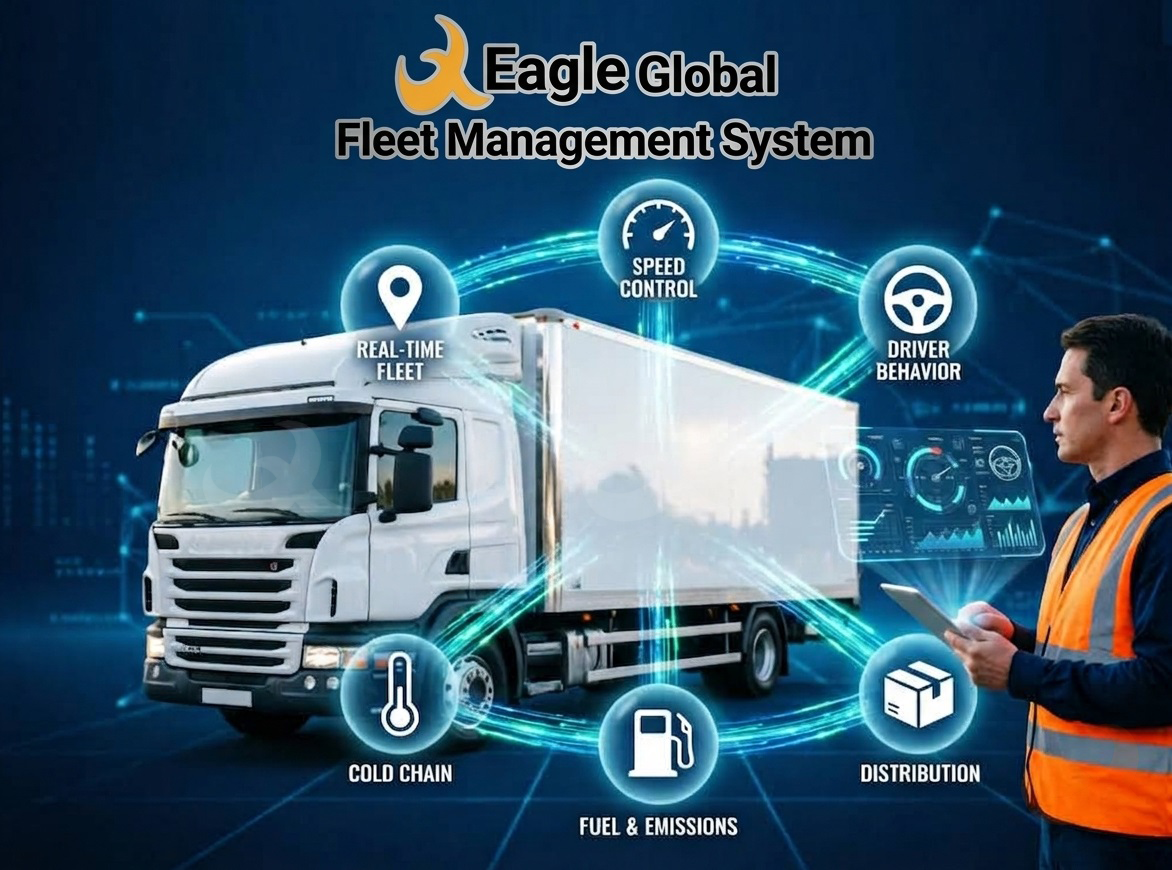
Navigating the dense, congested urban environments of Kuwait City, Riyadh, or Cairo requires a completely different approach to fleet management than driving on open highways. The stop-and-go traffic, the narrow streets, and the constant pressure to meet tight delivery windows create a chaotic environment where inefficiencies multiply rapidly. As an engineer who has spent countless hours analyzing route data and idling times in these exact urban zones, I know that standard tracking systems cannot solve the complexities of city logistics. It requires an advanced, intelligent system capable of processing real-time traffic data, predicting delays, and optimizing routes on the fly. This urban complexity is exactly what the advanced capabilities of the Eagle Tracking system are designed to master, turning the chaos of the city into a streamlined, profitable operation.
The cornerstone of urban fleet efficiency is the ability to navigate congestion effectively, which is handled by the real-time Eagle Generator Rental Management and routing module. In a city like Kuwait, a route that takes twenty minutes at noon can take an hour during the evening rush. The Eagle Tracking system integrates live traffic feeds, historical congestion patterns, and real-time incident reports to calculate the most efficient path. But it goes beyond simple navigation; the system uses predictive algorithms to anticipate traffic build-ups before they happen. When a dispatcher assigns a delivery, the system calculates the route not just based on current distance, but on the predicted traffic conditions at the exact time the vehicle will reach each intersection. This proactive routing ensures that drivers avoid bottlenecks before they even see them, drastically reducing delivery times and fuel consumption.
Once the route is optimized, the next major challenge in the city is the excessive idling that occurs in traffic jams and while waiting at delivery points, bringing us to the fuel management and anti-siphoning protocols. In urban environments, a significant portion of fuel is burned while the engine is running but the vehicle is not moving. The Eagle Tracking system utilizes advanced idle-reduction algorithms that monitor the engine status and the vehicle's movement. If the system detects that the vehicle has been idling for more than a predefined threshold, say three minutes, without the Power Take-Off being engaged or the air conditioning being strictly necessary, it alerts the driver to turn off the engine. For fleets equipped with start-stop technology or auxiliary power units, the system can automatically manage these features, ensuring that the cabin remains comfortable while the main engine is off, saving thousands of liters of fuel annually across a large urban fleet.