 تويت
تويت
 The Kinematics of Harsh Events and Vehicle Stress
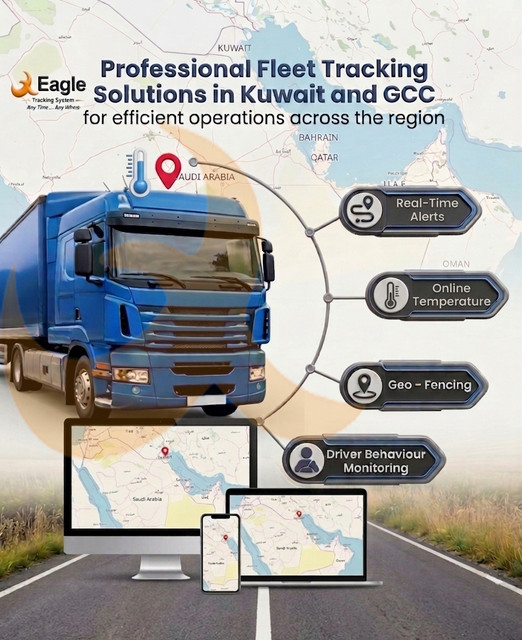
The most sophisticated mechanical engineering in the world can be undone in a fraction of a second by a single poor decision behind the wheel. As a field engineer who has spent years inspecting drive trains and suspensions after they have been subjected to abuse, I can attest that the human element is the most variable and destructive force in fleet management. Harsh acceleration, sudden braking, and aggressive cornering are not just bad habits; they are violent kinetic events that send destructive shockwaves through the entire vehicle. When a driver slams on the brakes, the kinetic energy of the cargo transfers forward, overloading the front axles and causing the trailer to push the cab, increasing the risk of a jackknife. Eagle driver behavior monitoring systems are engineered to capture and analyze these kinematic events with absolute precision. By understanding the physical forces at play, we can isolate the exact moments of abuse, providing fleet directors with the granular data needed to correct the habits that silently destroy your assets and endanger your personnel.
Sensor Fusion and the Architecture of Behavioral Telemetry
Capturing driver behavior requires more than just measuring how fast the driver pushes the pedals. It requires a comprehensive understanding of the vehicle's physical movement in three-dimensional space. Eagle Car GPS tracker device for equipment tracking achieve this through advanced sensor fusion, combining data from multiple high-frequency inputs. The onboard hardware features industrial-grade three-axis accelerometers that measure longitudinal and lateral G-forces, paired with precision gyroscopes that measure the yaw rate and roll angle of the vehicle. This inertial data is continuously synchronized with the steering angle sensor and the brake pressure data read directly from the Controller Area Network bus. By fusing these disparate data streams, the system's onboard processor can differentiate between a harsh braking event caused by an aggressive driver and one caused by a legitimate emergency avoidance maneuver. This architectural depth ensures that the behavioral scores generated are highly accurate and context-aware, eliminating false positives and providing a true, unbiased reflection of the driver's actual performance on the road.
In-Cab Acoustic Feedback and Real-Time Cognitive Correction
Logging a harsh event in a database is useless if the driver does not understand the consequence of their action in the moment it occurs. Behavioral modification requires immediate feedback. Eagle systems incorporate a sophisticated, tiered in-cab acoustic feedback mechanism designed to correct behavior without causing distraction or frustration. When the system detects a minor infraction, such as a slightly aggressive acceleration from a stop, it emits a soft, brief chime. This subtle auditory cue is enough to bring the driver's attention back to their technique. If the behavior continues or escalates to a severe event, like a harsh cornering maneuver that approaches the vehicle's rollover threshold, the system triggers a clear, synthesized voice prompt, such as reducing speed for the upcoming curve. This real-time cognitive correction trains the driver to associate specific physical actions with immediate auditory feedback, accelerating the learning curve and ingraining safe driving habits much faster than traditional post-trip reviews ever could.
Sensor Fusion and the Architecture of Behavioral Telemetry
Capturing driver behavior requires more than just measuring how fast the driver pushes the pedals. It requires a comprehensive understanding of the vehicle's physical movement in three-dimensional space. Eagle Car GPS tracker device for equipment tracking achieve this through advanced sensor fusion, combining data from multiple high-frequency inputs. The onboard hardware features industrial-grade three-axis accelerometers that measure longitudinal and lateral G-forces, paired with precision gyroscopes that measure the yaw rate and roll angle of the vehicle. This inertial data is continuously synchronized with the steering angle sensor and the brake pressure data read directly from the Controller Area Network bus. By fusing these disparate data streams, the system's onboard processor can differentiate between a harsh braking event caused by an aggressive driver and one caused by a legitimate emergency avoidance maneuver. This architectural depth ensures that the behavioral scores generated are highly accurate and context-aware, eliminating false positives and providing a true, unbiased reflection of the driver's actual performance on the road.
In-Cab Acoustic Feedback and Real-Time Cognitive Correction
Logging a harsh event in a database is useless if the driver does not understand the consequence of their action in the moment it occurs. Behavioral modification requires immediate feedback. Eagle systems incorporate a sophisticated, tiered in-cab acoustic feedback mechanism designed to correct behavior without causing distraction or frustration. When the system detects a minor infraction, such as a slightly aggressive acceleration from a stop, it emits a soft, brief chime. This subtle auditory cue is enough to bring the driver's attention back to their technique. If the behavior continues or escalates to a severe event, like a harsh cornering maneuver that approaches the vehicle's rollover threshold, the system triggers a clear, synthesized voice prompt, such as reducing speed for the upcoming curve. This real-time cognitive correction trains the driver to associate specific physical actions with immediate auditory feedback, accelerating the learning curve and ingraining safe driving habits much faster than traditional post-trip reviews ever could.