 تويت
تويت
 Why Cross-Border Fleets Need One System, Not Six
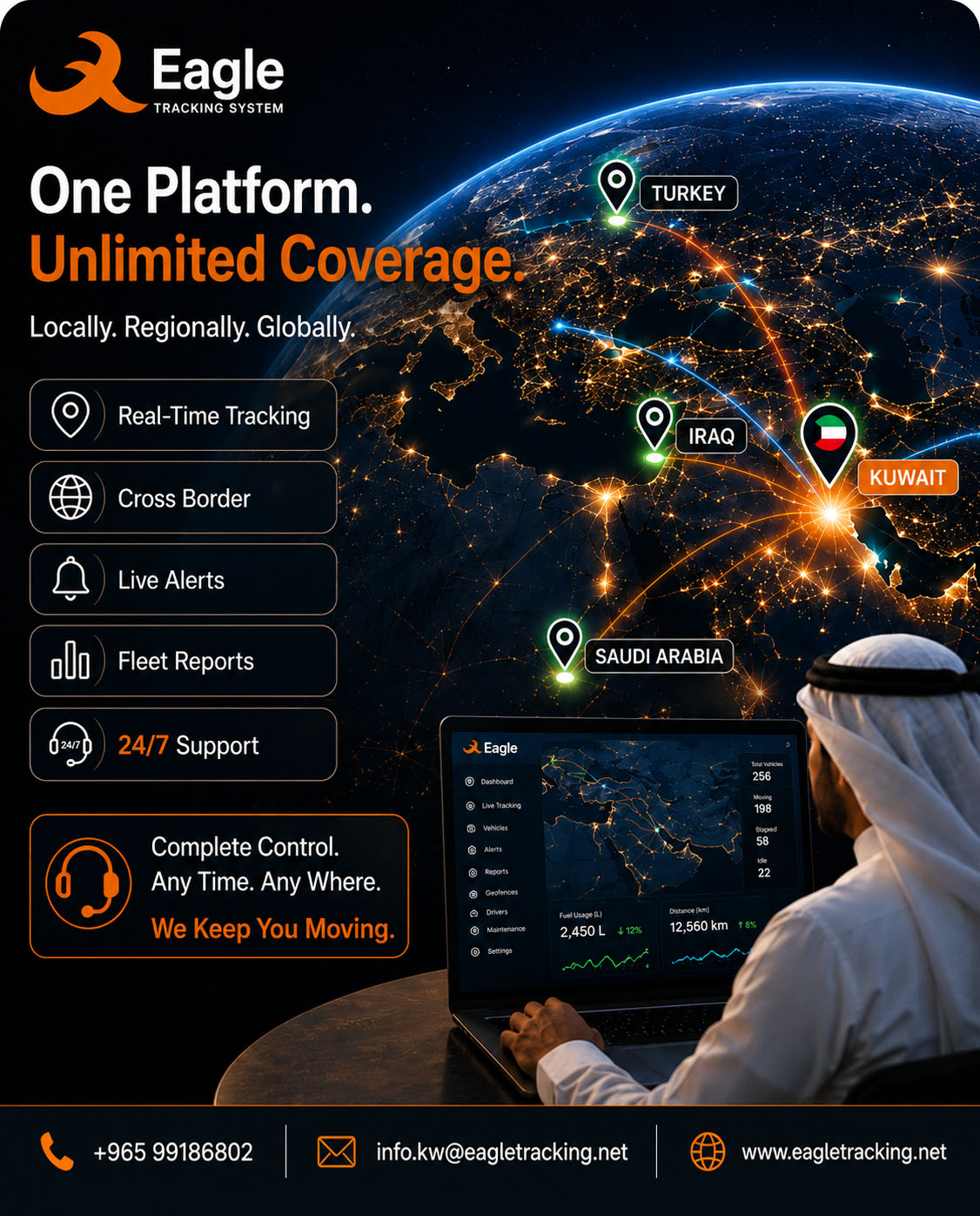
A single dashboard showing a fleet scattered across Riyadh, Dammam, Kuwait City, and Dubai sounds like an ambitious goal for a mid-sized rental company. For the operators already running it, it is simply Tuesday morning. GCC-wide equipment fleets have outgrown the region's fragmented, country-by-country management habits, and the companies pulling ahead are the ones that built one unified tracking layer over all of it.
Why Cross-Border Fleets Need One System, Not Six
Equipment rental firms operating across Saudi Arabia, the UAE, Kuwait, Qatar, Oman, and Bahrain often inherited separate tracking platforms in each market, usually because each branch signed a local contract independently. The result is a fleet director staring at six logins each morning, reconciling six different data formats, and losing the one thing GPS tracking is supposed to provide: a clear, comparable view of the entire asset base.
Consolidating onto a single platform with multi-country SIM roaming changes that dynamic immediately. A crane that starts a job in Jubail and finishes in Manama shows up as one continuous asset record rather than two disconnected fragments, and utilization comparisons across branches finally mean something.
Border-Crossing Logistics and Customs Documentation
Heavy equipment moving between International Vehicle Tracking system in Kuwait and GCC states passes through customs checkpoints where accurate documentation of location history, ownership, and movement dates can shorten clearance times considerably. Fleets with GPS-verified movement logs can produce a defensible timeline showing exactly when a machine crossed at King Fahd Causeway or the Salwa border crossing, reducing disputes with customs authorities over undeclared or delayed equipment.
This same movement data feeds directly into GCC customs bond renewal processes, where authorities frequently request proof that temporarily imported machinery has not overstayed its permitted window. What used to require a scramble through paper trip sheets now takes a single exported report.
Regional Utilization Benchmarking
One of the most underused capabilities of a unified GCC tracking platform is comparative benchmarking. A fleet director can finally see that excavators in the Eastern Province of Saudi Arabia are running at seventy percent utilization while an identical unit class in Muscat sits closer to forty percent, prompting a redeployment decision that a fragmented system would never have surfaced.
This kind of cross-market visibility turns equipment allocation from a gut-feel exercise into a quarterly planning discipline, with idle machines redirected toward the highest-demand geography before they become a sunk cost sitting in a yard.
Harsh Terrain, Dust, and Network Reliability
GCC terrain punishes tracking hardware in ways that milder climates never test. Desert dust infiltration, temperature swings between coastal humidity and inland dry heat, and long stretches of weak cellular coverage on inter-city highways all demand devices built for resilience rather than convenience. Fleets that select consumer-grade trackers built for passenger cars routinely see higher failure rates once those units are bolted onto machinery working in Rub' al Khali sand conditions or the rocky terrain of Oman's interior.
Industrial units with onboard data buffering solve the coverage problem elegantly: positions are logged locally when signal drops and transmitted in a burst once connectivity returns, so a report never shows a machine as missing simply because it passed through a dead zone.
Driver and Operator Accountability Across Borders
Operator behavior varies by crew, by contractor, and sometimes by country, and a regional platform lets fleet directors compare harsh-braking events, unauthorized after-hours movement, and route deviation across every branch using the same scoring system. A driver who racks up violations in one country carries that record with them if they transfer to a project in another, closing a loophole that fragmented systems left wide open.
This visibility also supports fair, evidence-based conversations with subcontractors who lease equipment. Disputes over damage, excessive hours, or unauthorized site use are resolved with a timestamped movement log instead of conflicting verbal accounts.